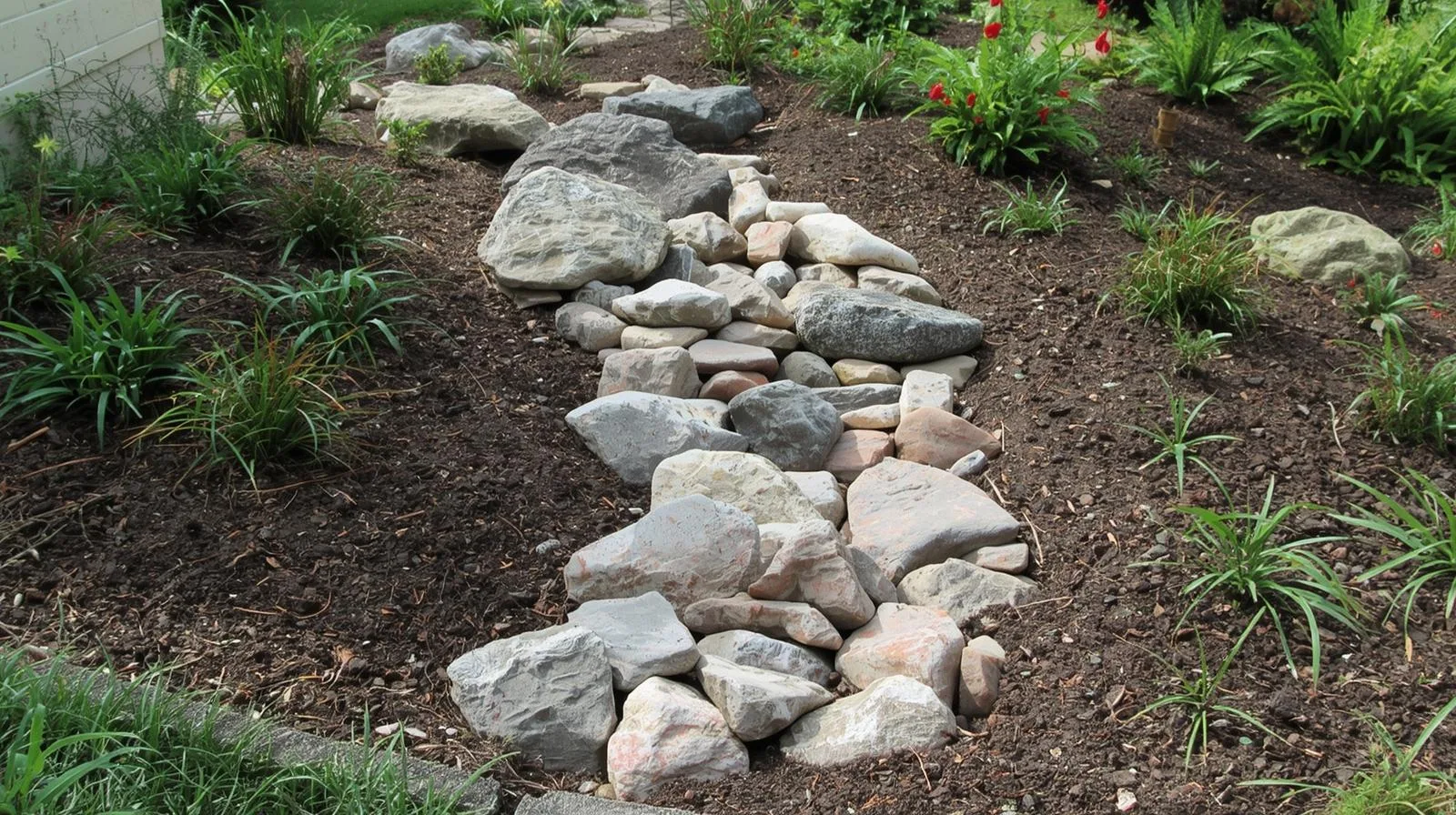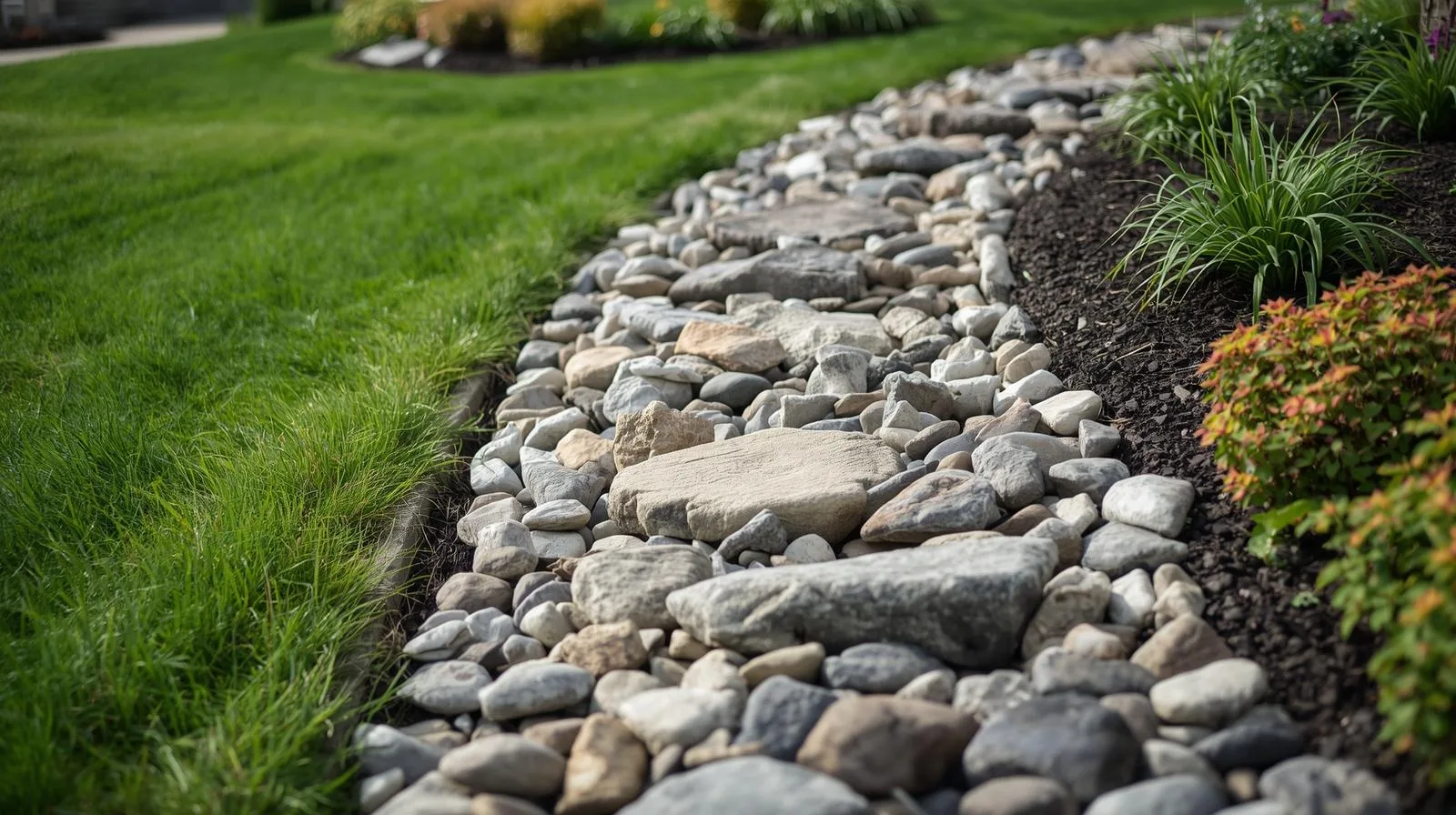
Afternoon storms across the Charlotte metro often dump hard rain in a short window, then leave lawn edges holding water while the open middle looks fine by evening. Sheet flow from driveways, sidewalks, and roof leaders collects at turf margins, downspout outlets, and low corners beside hardscape. Standing water at those edges is a drainage and grading problem first. It is not the same problem as a backyard mosquito season piece about evening comfort alone.
Pine Valley Turf Management walks edge ponds, leader discharge, and clay bowls with the same straightforward talk we bring to open lawn color. Call 704-831-8917 when runoff keeps returning to the same stripe after every storm.
Where storm water actually stops on a lot
Water follows pavement pitch, bed edges, and the lowest turf seam beside a walk. On Carolina clay, a short intense storm can sheet across the surface before it soaks. The first place you notice trouble is often a dark, soft band along the driveway, a puddle at a downspout splash block, or a bowl where the lawn meets a patio step. Center turf may recover overnight while the edge stays wet into the next afternoon.
Properties in Charlotte and nearby Union County towns share this pattern when roofs and drives dump onto lawn that was never graded as a channel. Photograph the wet edge within an hour after rain and again the next morning so you can show how long water sits.
Downspouts and splash blocks that aim at turf
Leaders that empty onto lawn a few feet from the foundation create a repeat soft circle. Extending discharge farther from the house, or directing water toward a bed that can accept it, often helps more than adding irrigation minutes elsewhere. Splash blocks that tip toward the house or toward a gate path push the same problem onto worn paths tall fescue already treats as weak.
When edge water and disease pressure stack on shaded fescue after humid heat, sort the main problem with our brown patch or drought short lawn quiz before you treat the whole yard as one failure. Wet shade and dry sun can live on the same controller map.
Hardscape edges and compacted seams
Drive aprons, sidewalk joints, and retaining wall toes concentrate runoff. Compaction from wheels and feet seals clay so storm water sits in a thin film instead of moving into the profile. Raising mowing height will not fix a bowl, yet scalping a wet edge makes recovery slower once the water finally leaves.
Yard drainage conversations belong here when the same corner ponds after ordinary storms, not only after rare floods. Core aeration in the correct season can help air and water move once grading and leader plans are realistic. Neither step replaces fixing a downspout that aims at the softest turf on the lot.
Irrigation overlap after storms
Controllers that ignore rain sensors, or sensors tipped by wind, can add water on top of storm saturation. Shaded areas that already hold dew then stay wet while sunny aprons still look thirsty. That mismatch invites disease on cool season turf and wasted runtime on valves that did not need help.
Read smart lawn watering when storms and heat share a week. Skip days and soak cycles are culture tools. They do not replace a drainage fix when water physically ponds at the edge every time clouds open.
Weeds, thin canopy, and soft edges
Standing water thins turf at the margin. Light reaches the soil, and opportunistic weeds fill the seam along pavement. Spot treating weeds without changing how water arrives often returns the same thin strip after the next storm cycle. Coordinated weed control and lawn care work better once the edge stays firm enough for grass to compete.
Bed lines that trap sheet flow may need landscape bed weed control and mulch habits that do not build dams against the lawn. Keep mulch below the turf crown line so storm water can leave the seam instead of pooling against a raised bed edge.
What to document before a visit
Note which storms leave water for more than a few hours, which leaders discharge onto lawn, and if the soft edge sits on shade or full sun. Mark gate paths that stay muddy when the middle of the yard is walkable. If you also manage Waxhaw slopes and clay banks, our Waxhaw area guide for lawn care and irrigation covers how grade and shade change irrigation planning on those lots.
Send two photos of the wet edge and one of the downspout outlet when you contact Pine Valley Turf. Mention any recent grading, new hardscape, or controller changes. Call 704-831-8917 if the same corner has ponded through several storm weeks and you want a drainage and turf plan on one calendar.
Realistic expectations after edge water
Edge recovery is usually gradual once water stops sitting. Color returns as crowns dry and roots reclaim the seam. Fertilizer alone will not lift a chronic bowl. Disease products will not dry a leader splash zone. Start with where water stops, then match lawn fertilization and culture to turf that can actually use the help.
Pine Valley Turf serves Charlotte metro communities with drainage, lawn programs, and clear reads when afternoon storms set the tone for the week.