School wind down changes how Charlotte region lawns get used before heat season fully arrives. Afternoon sports, graduation parties, and delivery traffic stack on the same gate stripes and mailbox runs tall fescue already treats as thin. Irrigation timers stretch toward daily runs while sneakers and stroller wheels compress soil on clay that recovers slowly. None of that requires a dramatic lawn failure story. It is the normal calendar shift that makes traffic and compaction visible if you know where to look.
Pine Valley Turf Management helps homeowners read that shift through lawn care, lawn mowing, and coordinated core aeration with straightforward advice. This article is about path to the gate wear and calm recovery on Carolina clay, not a promise that one product fixes every stripe before guests arrive.
Traffic concentrates where turf is already weakest
Cul de sac entries in Matthews, Mint Hill, and Indian Trail often show the same geometry: a diagonal cut from driveway to front door, a mailbox run along pavement, and a side path to the gate kids use after school. Tall fescue tolerates wear when height and moisture stay sane. Repeated compression before roots recover leaves shiny stripes that green slower than the middle of the yard even when irrigation looks fine on paper.
Walk those paths on a firm afternoon after a warm week. Note whether grass springs back the same day or stays folded until evening. Compare gate corners with shaded side yards that see half the steps. Photograph worn lanes before you assume the whole lawn needs a new program.
Mowing height matters when traffic spikes
Scalping paths to the gate before a host weekend concentrates stress where feet already land. Our mowing height protects tall fescue article explains why a higher deck on traffic lanes beats chasing stripe cosmetics on stressed crowns. Professional mowing keeps height consistent when travel disrupts your Saturday rhythm.
Clippings that mat on humid nights shade young tillers along the same paths guests will cross. Disperse mats when dry instead of leaving wet blankets on compressed soil. Pair mowing discipline with our host weekend lawn traffic piece when calendars stack people on the sunny apron between house and pool.
Irrigation overlap makes traffic damage louder
Clay holds water. When school wind down coincides with unchanged spring minutes, paths to the gate can stay soft while the center of the yard looks acceptable. Soft soil compacts faster under wheels and cleats. Several shorter cycles with soak time often beat one long flood on Charlotte profiles.
Read our smart lawn watering narrative when afternoons outran your controller, and our rainy week irrigation skip guide when storms and heat share a week. Skipping is not neglect when soil already drank from radar.
Warm season patches read traffic differently
Mixed yards run tall fescue in shade and bermuda or zoysia in full sun. Sunny aprons beside driveways recover on a different clock than shaded fescue entries. Flooding fescue to green a worn bermuda strip invites disease on cool season turf. Tell us where species change so weed control and lawn fertilization stay appropriate for your turf.
Our chinch and irrigation overlap article helps when sunny damage could be insects instead of cleats alone. Traffic and insects can share the same apron without being one diagnosis.
Compaction and aeration belong in the conversation
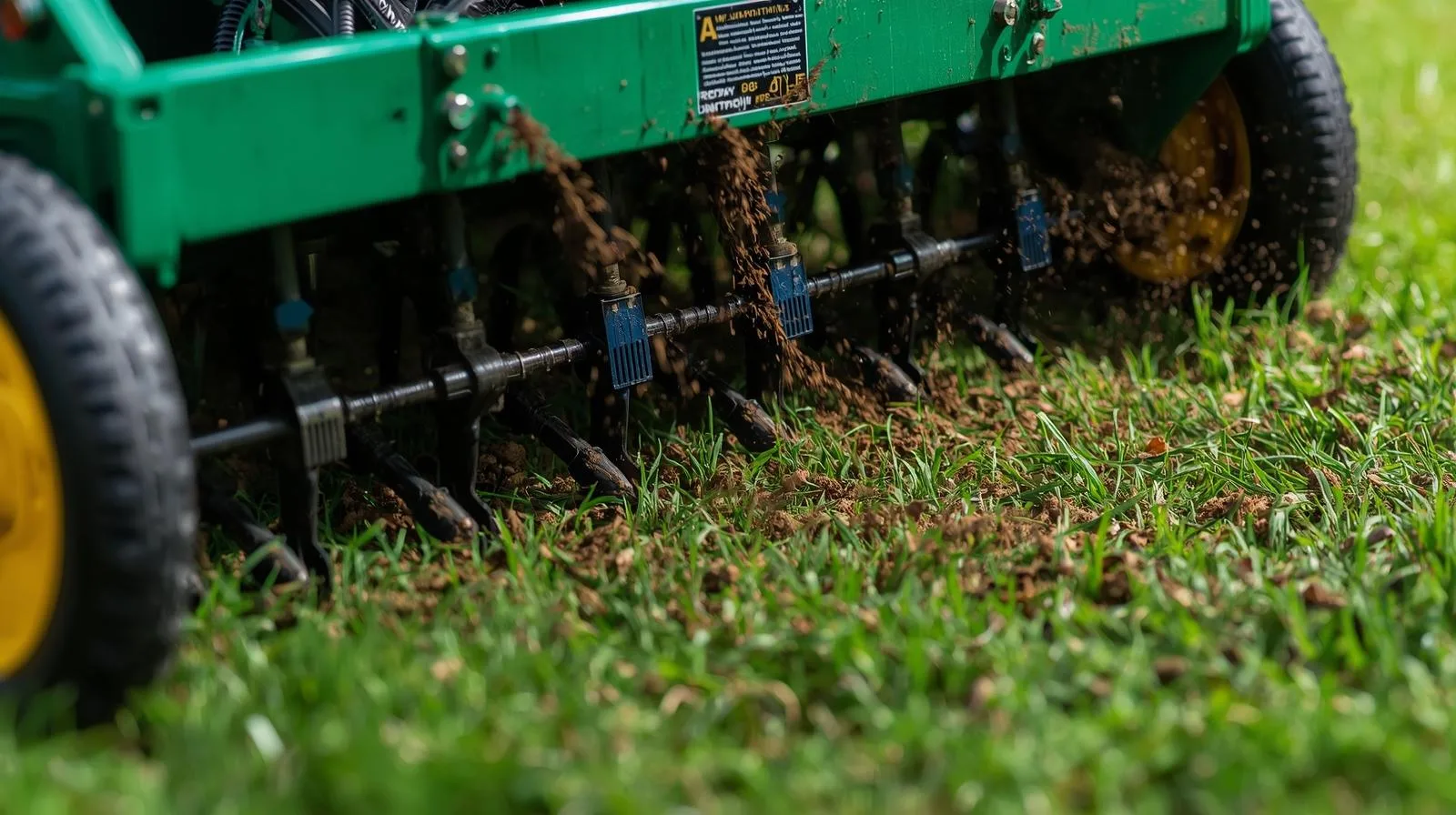
When a screwdriver stops hard an inch down along paths to the gate after ordinary rain, compaction may join traffic on the clear picture. Core aeration in the correct season helps air and water reach roots once wear patterns are documented. Our core aeration benefits article explains how compaction pairs with recovery, not instant repair.
Heavy ruts from delivery trucks or bounce houses may need selective seeding through overseeding after moisture and compaction plans are realistic. Seeding without fixing daily wear often produces a green ribbon that fades by midsummer.
Weeds exploit thin canopy on worn lanes
Stressed turf opens light at soil level along traffic stripes. Opportunistic weeds arrive on warm edges first. Avoid random herbicide reactions on heat stressed grass. Coordinated weed control with feeding matches timing to temperature and growth stage, not panic after the first busy weekend.
Bed lines that blur after foot traffic may need landscape bed weed control separate from turf products. Entry shrubs still matter for first impressions; our shrub touch ups near guest entries article pairs when the front frame needs attention in the same host window.
Insects and disease stay separate lanes
Circular patches with smoky margins after prolonged leaf wetness deserve a professional look through lawn disease control. Straight shiny stripes along gates and mailboxes usually are traffic and water overlap first. Lawn insect control belongs in the call when sunny thinning matches scout patterns instead of wheel lines alone.
Evening comfort on lanes guests actually use
If mosquitoes end parties on the same path you are trying to recover, mosquito control may be worth discussing as part of an integrated plan with standing water habits, not as a substitute for reading compaction.
Practical checklist before the next heavy week
Raise mowing height on traffic lanes. Redirect foot traffic where possible with temporary stones or cones on the worst corner. Adjust irrigation for depth instead of nightly surface sprinkles. Photograph worn stripes before and after a busy weekend. Note species changes along the driveway apron.
These habits support professional visits. They do not replace a site walk when gate geometry and clay compaction need a mapped plan.
What to send before we visit
Two photos of worn paths, your town, and whether irrigation ran in the last forty eight hours. Mention recent rain, pool proximity, and graduation or sports traffic you expect in the next two weeks through contact. Pine Valley Turf Management serves Waxhaw, Ballantyne, and the greater Charlotte region with programs built for real traffic on real clay.