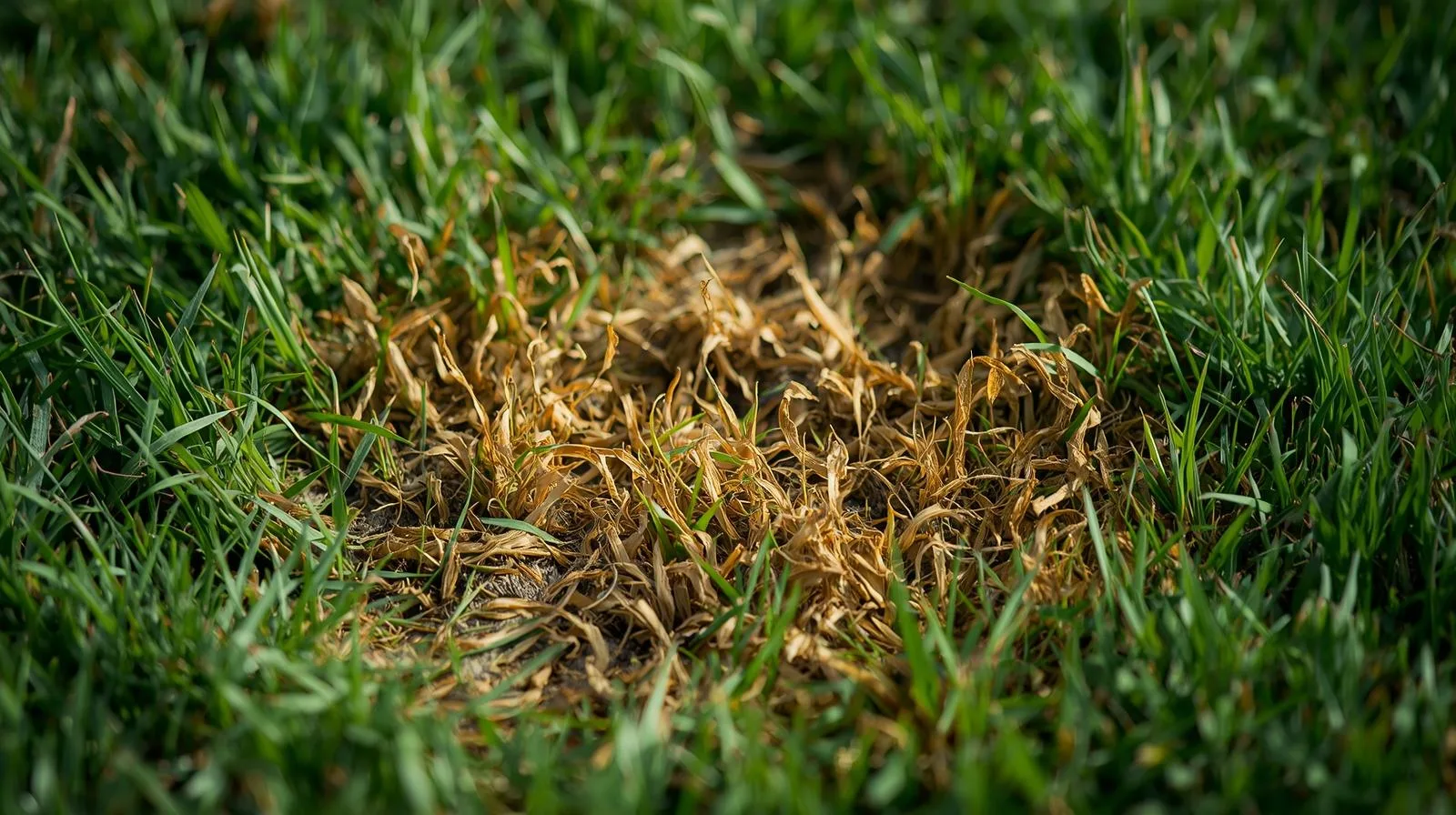
A dull mower blade tears grass instead of cutting it, and in mid July heat those shredded tips dry to a whitish tan within a day. From the porch that haze reads like disease, so the reflex is to buy a fungicide. Often the real fix is a sharp blade and a higher deck, not a spray. Telling a torn tip apart from a fungal lesion is the mid summer skill that saves the most money on Charlotte area lawns.
Pine Valley Turf Management looks at the leaf tip first, then the pattern, before anyone reaches for a product. Call 704-831-8917 when a fresh whitish cast shows up a day or two after mowing in the heat.
Why torn tips look like disease in July
A sharp blade slices the leaf clean, so the cut end seals and stays green. A dull or nicked blade crushes and rips the blade, leaving a frayed end with exposed tissue. Under strong July sun that exposed tissue bleaches to a pale straw color. Multiply that across every blade on the lawn and the whole surface takes on a gray-white haze, especially when you look across it toward the light.
That haze is uniform because the mower touched every plant the same way. Real disease usually arrives in shapes: rings, patches, or blotches that follow shade, moisture, and airflow rather than mower lines. On tall fescue lawns across Charlotte and nearby towns, the torn-tip look is one of the most common false alarms of the season.
The close-up test that settles it
Kneel down and look at a single blade tip. A clean cut is a smooth, flat or slightly angled edge that is still green right up to the end. A torn tip is ragged, split, or whitish, and the damage sits only at the very top of the blade. If nearly every tip is frayed the same way, you are looking at a blade problem, not a pathogen.
Then check timing. Torn-tip whitening shows up within a day or two of mowing and does not spread on its own. Disease tends to expand between mowings and often lines up with the shaded, slow-drying corners we cover in our brown patch or drought short lawn quiz. When the pattern follows your mowing path, the blade is the suspect.
When it actually is disease
Torn tips and real disease can share a week, so this is not either-or. Brown patch on humid, shaded fescue shows soft tan patches, sometimes with a darker smoke ring at the edge in the morning. That belongs in a lawn disease control conversation, not a blade sharpening one. The point is to separate the two before treating, so you do not spray a whole lawn for a mower issue or ignore a spreading patch because you assumed it was the blade.
If both are present, sharpen and raise the deck to stop adding wounds, then treat the patch that is genuinely expanding. Wounded tips give disease an easier entry, so fixing the cut quality also lowers pressure on the areas that are truly sick.
Deck height and frequency in peak heat
July is not the month to scalp cool season turf. A taller cut shades the crown, keeps soil cooler, and leaves more leaf to recover after each pass. When growth slows in heat, mow less often and never remove more than a third of the blade at once. Cutting a stressed, tall lawn short in one pass is how you turn a minor issue into a thin, straw-colored week. Our mowing height guide covers the summer deck settings in more detail.
Mow when the lawn is dry and the sun is off the worst of its peak so torn edges are less likely and the plant is not already wilting. These culture choices pair with the watering habits in our smart lawn watering guide. Sharp blade, right height, sensible timing, and correct water do more for July color than most products.
Blade care most homeowners skip
A blade dulls faster than people expect, especially where sandy soil, mulch, or the occasional stick rides through the deck. Sharpening two or three times a season keeps cuts clean through the hardest stretch. A bent or badly nicked blade will leave a repeating torn stripe no matter how sharp the rest of the edge is, so inspect for damage, not just dullness.
If a mowing service handles the lawn, ask how often blades are sharpened and whether they raise the height in summer. Consistent, professional lawn mowing and a full lawn care program keep cut quality steady when heat is doing its worst.
What to document before a visit
Photograph a close-up of a few leaf tips and one shot across the lawn toward the light so the haze shows. Note when you last mowed, how tall you cut, and whether the whitish look followed that mowing or crept in between mowings. Mark any patches that are clearly a different shape than the mower lines.
Send those photos when you contact Pine Valley Turf, and mention blade age and mowing height. Call 704-831-8917 if the whitish cast keeps returning after every mow, or if a shaped patch is spreading on its own and needs a real diagnosis.
Realistic expectations after a fix
A sharp blade and a raised deck usually clear a torn-tip haze within one or two mow-and-grow cycles as fresh growth replaces the frayed tips. Color returns from the top down as new blades come in clean. Fungicide will not green up torn tips, and sharpening will not stop a true disease patch. Match the fix to what the leaf tip is actually telling you.
Pine Valley Turf serves Charlotte metro communities with mowing, lawn programs, and straight reads when summer heat blurs the line between a mower problem and a lawn disease.