Pre-emergent weed control is often described as though one spring application fits every lawn. The product creates a barrier intended to prevent selected annual weeds from establishing. The timing and product still need to match the grass, target weed, season, and other lawn work planned for the property.
Pine Valley Turf Management maintains a dedicated Kentucky bluegrass treatment program because bluegrass spreads through underground rhizomes and can respond differently to products used more broadly on another lawn type. Our program uses selective pre-emergent applications in early spring and fall alongside balanced fertilization and targeted weed control. The lawn should be identified before the weed plan is selected.
Confirm that the lawn is Kentucky bluegrass
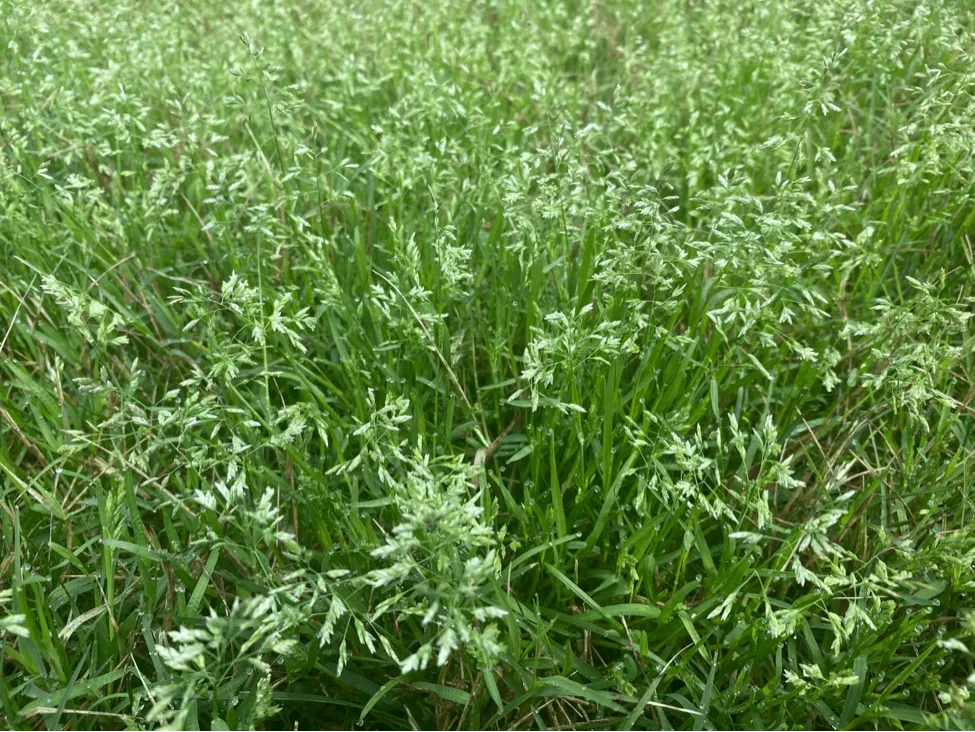
A homeowner may call any fine-bladed green turf "bluegrass." Greater Charlotte properties can contain tall fescue, Bermudagrass, Zoysia, Kentucky bluegrass, mixed cool-season turf, mixed warm- and cool-season turf, old sod, volunteer grasses, and annual bluegrass weeds. The word bluegrass can also create confusion between desirable Kentucky bluegrass and annual bluegrass growing as a weed.
We should identify the turf and target plant before recommending the program. Tell the technician about sod or seed history, previous lawn company, overseeding, seasonal color changes, areas spreading naturally, irrigation, shade, mowing height, weed history, and previous pre-emergent products. The right service depends on which bluegrass you want to keep and which plant the program is trying to prevent. That conversation often starts on a property walk in Charlotte, Matthews, or Waxhaw.
Rhizomes are part of the lawn's repair strategy
Kentucky bluegrass can spread through underground stems called rhizomes. That growth allows the turf to fill limited bare or thin areas when conditions support it. Some pre-emergent herbicides can damage bluegrass or interfere with natural spreading, which is why we use selective products and timing for the dedicated program.
Do not apply another generic retail product on top of our schedule. The combination could affect the turf, planned seeding, or the target weed program. Keep a record of every lawn application.
Early spring and fall have different targets
Our bluegrass program uses carefully timed pre-emergent applications in early spring and fall. Those visits are intended to address annual weeds before germination during relevant seasonal windows.
Ask which weeds are being targeted in spring, which are being targeted in fall, which product category is being used, how soil temperature affects timing, whether irrigation needs to activate the product, whether any areas are excluded, how the application affects seeding, and when the next lawn service is scheduled. The treatment calendar should be connected to the target weeds rather than applied because the same date appears on every property's annual schedule. Broader cool-season weed work still sits under weed control and the overall lawn care program when the turf type differs.
Pre-emergent and seeding can conflict
A product intended to stop weed seed from germinating may also affect desirable grass seed. We provide aeration and overseeding as separate services and identify fall as an important renovation period for cool-season lawns.
The bluegrass program should state whether seeding is planned, which area will be seeded, whether that area receives pre-emergent, the required waiting period, product limitations, fall schedule, spring schedule, bare-area strategy, rhizome recovery, and alternative weed work. Do not schedule seeding with another provider without telling us what product was applied and when.
One bare patch may not need seed immediately
Because Kentucky bluegrass can spread through rhizomes, a small thin section may be able to fill naturally under the right conditions. That does not mean every bare area should be ignored.
The technician should evaluate size, soil, compaction, sun, water, traffic, disease, insects, grade, existing living turf, and previous seed failure. The response might involve fertilization, soil conditioning, aeration, irrigation adjustment, traffic reduction, seeding, or simply allowing the existing turf to recover. The presence of rhizomes gives the lawn another repair mechanism. It does not correct a broken sprinkler or deeply compacted construction soil.
Fertilization should support growth without forcing it
We combine balanced fertilization with the specialized weed program. The lawn should not receive additional fertilizer simply because you want the rhizomes to spread faster. Too much growth can increase mowing needs and may not address the condition that caused thinning.
Ask what nutrients are being applied, which season, how the program differs from fescue or warm-season turf, whether a soil test is needed, whether lime or soil conditioning is being considered, what response should be expected, and when the lawn should be reviewed. The service should remain a measured program rather than a sequence of green-up products.
Mowing affects bluegrass density
The mowing height and frequency should fit the turf and season. Avoid removing a large share of the leaf at one time. Keep mower blades sharp and vary the mowing direction where practical.
Tell us when another maintenance company handles mowing. The lawn-treatment and mowing schedules should not work against each other. We provide mowing in selected Concord and Huntersville areas as part of certain full-service programs, but many treatment customers use another provider or mow the lawn themselves. Share the recommended mowing information with the person actually operating the mower.
Annual bluegrass is a different plant
Annual bluegrass can appear as a lighter-colored, seed-producing weed in turf. Kentucky bluegrass is the desired lawn in this program. Do not request "bluegrass treatment" without clarifying which plant you mean.
A useful service request is that you believe the lawn is Kentucky bluegrass, a lighter annual grassy weed appeared last cool season, and you want the turf and weed identified before another pre-emergent application. That gives us the opportunity to confirm both sides of the program.
Map mixed areas
A property may have Kentucky bluegrass in one lawn section and another turf type elsewhere. Create a simple map showing front lawn, rear lawn, sunny side, and thin shade with turf type, target weed, pre-emergent plan, and seeding plan for each. Do not apply one whole-property program simply because one section has been identified. Mixed warm-season edges may still need a different conversation, including cases covered in our Bermudagrass in cool-season turf article.
Keep the seasonal treatment record
Save turf identification, product, application date, areas treated, target weeds, weather, irrigation instructions, fertilizer, aeration, seeding, mowing, photos, and follow-up notes.
Pine Valley Turf Management is based at 8320 Indian Trail Fairview Road in Indian Trail and can be reached at 704-831-8917. Browse the blog or contact us when you want the bluegrass program confirmed before the next pre-emergent window. Related service details also sit under services.