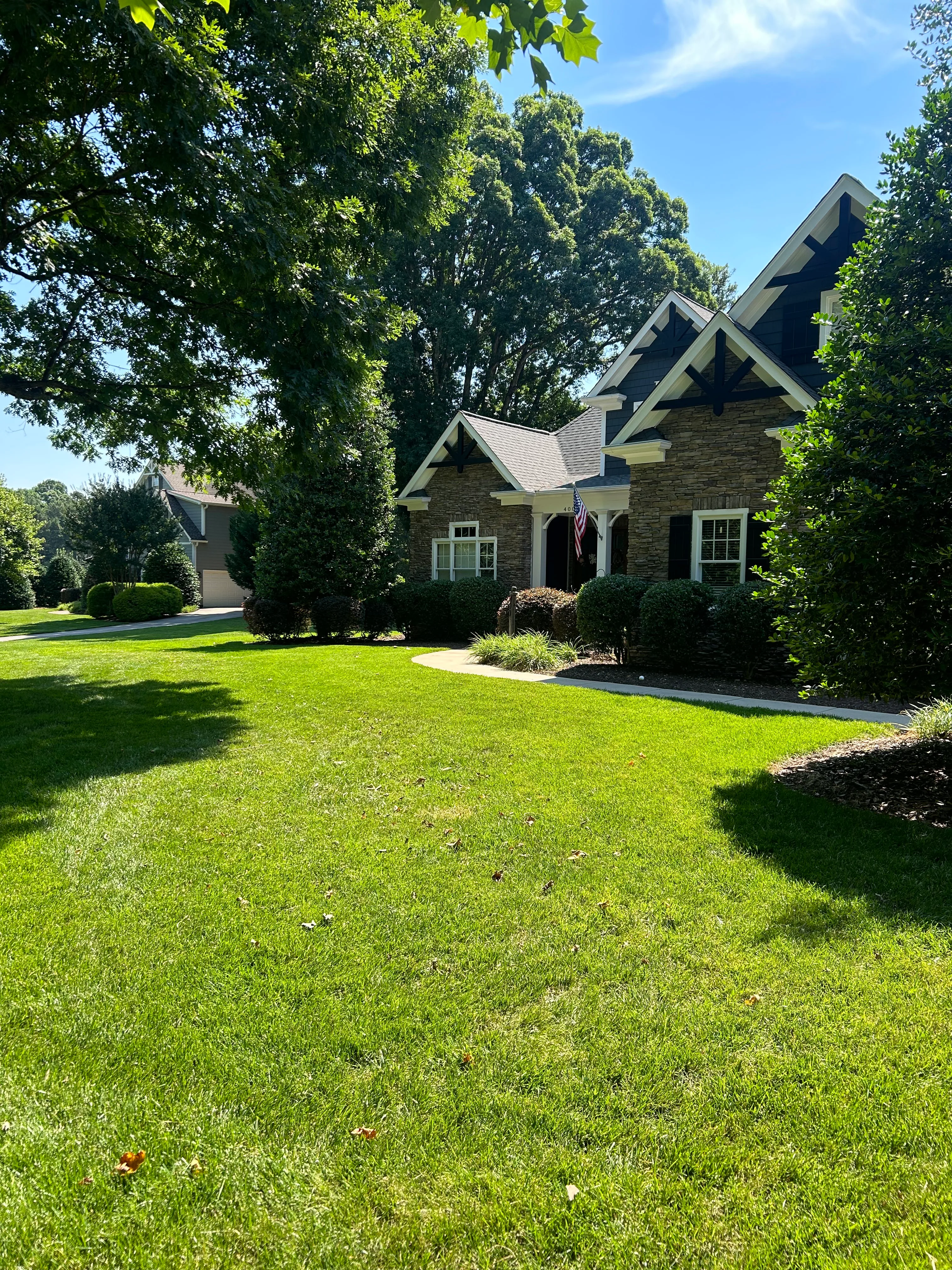
Shade from mature oaks and maples is a selling point in Pineville and Weddington until the grass under those trees turns to bare soil and mossy patches. The issue is rarely one missing product. It is usually a mix of less sunlight, tree roots competing for water, and years of the same grass trying to behave like it sits in full sun in a spot that behaves more like partial shade every season as branches grow wider.
Pine Valley Turf Management helps you sort shade, soil, and seed choices with overseeding, aeration, and tree and shrub care so the whole yard looks intentional instead of half forgotten.
How Much Sun the Lawn Really Gets
Tall fescue tolerates some shade but still needs several hours of direct light or very bright filtered light to stay thick. When canopies touch or gutters dump extra moisture on one corner, microclimates shift. Walk the area at mid morning, noon, and late afternoon once in midsummer and note where sun actually hits the ground. Spots that never see direct sun may need a different plan than spots that get a few hours of strong light.
Tree Roots and Dry Patches Under the Canopy
Large surface roots pull water the same way grass roots do. Mulch rings that respect trunk flare can protect tree health while you stop trying to grow dense turf on top of major roots. In some Waxhaw and Marvin yards, widening a bed line a few feet and switching to mulch or shade tolerant groundcover under the dripline solves the eyesore without fighting nature.
Improve Odds Before You Seed
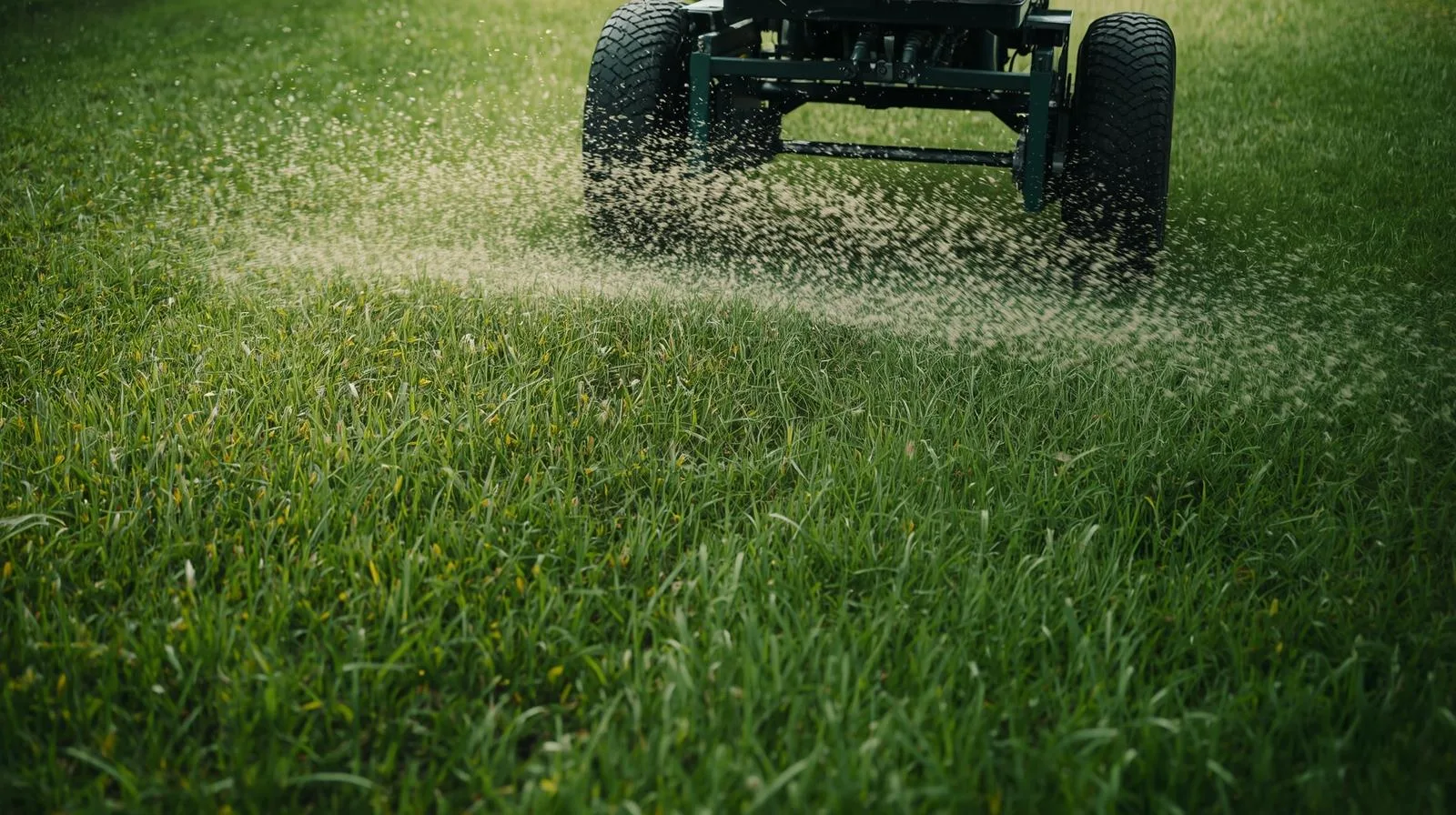
Core aeration in the correct window reduces compaction from foot traffic and mower wheels that shade areas often see because people cut corners across the same path. Good seed to soil contact matters more in shade because seedlings are weaker from day one. A light topdressing of compost on bare patches after aeration can help if drainage is already reasonable and you are not burying the crown of the grass.
Choosing Seed and Setting Expectations
Shade mixes labeled for the transition zone are a better fit than the cheapest bag on the shelf. Even then, expectations should stay realistic: shade turf is usually thinner than full sun turf. Combining selective pruning for clearance, not topping, with improved soil and timing on overseeding gives you the best chance. Our overseeding service is built around fall windows that match tall fescue in North Carolina.
When to Bring in Professional Help
If branches hang low over the roof, a certified arborist should handle major cuts. For lawn level work, a steady plan beats one heavy rescue each spring. We can align fertilization, aeration, and overseeding with how much sun you truly have and whether tree health treatments are part of the picture through our shrub and tree programs.
- Map actual sun before you buy seed.
- Water deeply but less often in shade so you do not encourage fungus on blades that stay wet too long.
- Keep mower height on the taller side so each blade catches as much light as possible.
Mowing and Foot Traffic in Shady Corners
Shade areas often sit where kids cut across the yard or where the mower turns every single week. Those repeated passes compact soil and wear crowns. Raising the mower, changing the turn zone, and stepping lightly on wet soil after rain all help. If a path is unavoidable, a few stepping stones or a narrow mulch strip can look planned and save the grass you still want to keep. In older neighborhoods near Pineville where lots are tight, one shady side yard carries almost all the foot traffic for garbage day, pets, and hose reels, so that strip deserves gentler treatment than the open front lawn.
Realistic Color and Density
Shade turf may never match the front yard in July, and that is normal. The goal is even color without bare mud and without constant reseeding every spring. Steady soil improvement, correct seed, and patient watering beat a single heavy application that promises instant carpet in conditions the label never truly fits.
Working With Your Trees, Not Against Them
Our shrub and tree care team can help you balance fertilizer needs, insect issues, and sensible pruning goals with the lawn below. Healthy trees and a modest understory often look better than bare dirt ringed with struggling turf. Sometimes the winning design is a wider bed, fresh mulch, and a handful of shade tolerant plants instead of forcing full sun density where the sky never opens up.
Thin grass under trees is a common story in our service area. You do not have to solve it alone. Contact Pine Valley Turf Management for a free quote. We serve Pineville, Weddington, Waxhaw, Marvin, and the greater Charlotte area with lawn and landscape services grounded in local conditions.