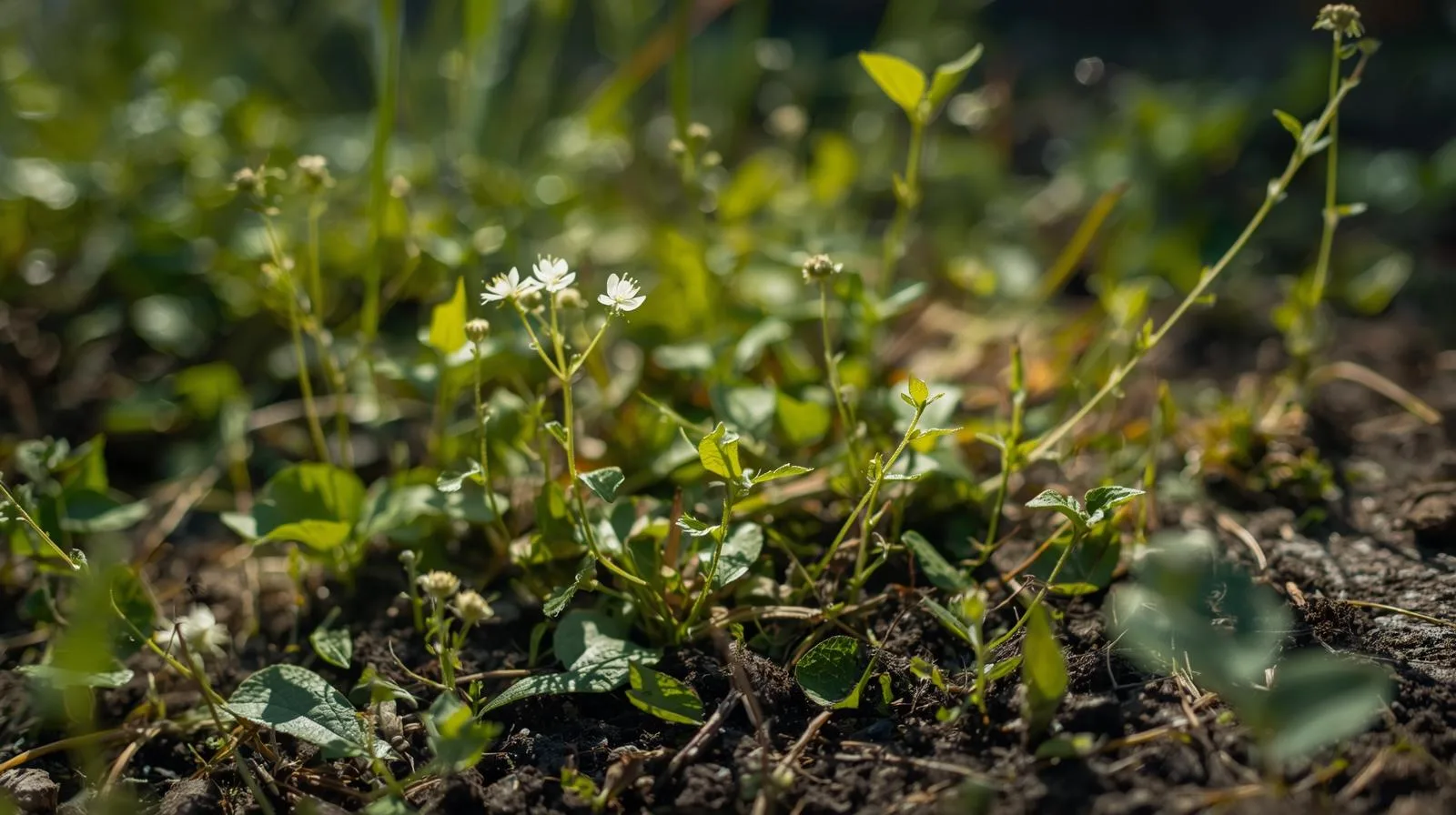
A weed does not know it crossed from the lawn into the mulch.
The treatment plan does.
That is why Pine Valley Turf Management offers normal lawn weed control and a separate Landscape Bed Weed Control service. The lawn contains grass we want to preserve. The bed may contain shrubs, perennials, annual flowers, groundcovers, mulch, and exposed soil. The technician is working around a completely different group of desirable plants.
For homeowners, the distinction is useful because "we have weeds everywhere" can easily turn into the assumption that one lawn treatment should clean up the entire property.
It usually is not that simple.
A treatment appropriate for turf may not belong around ornamental plants
In the lawn, the desirable plant is the turfgrass.
Our lawn care program includes pre-emergent and post-emergent weed control integrated with fertilization and other turf services.
Inside a landscape bed, the technician may be working inches from a hydrangea, ornamental grass, perennial, groundcover, or seasonal flower that the homeowner intentionally planted.
That changes how the work is approached.
We say our bed program uses targeted applications selected around the ornamental plants already growing there.
The homeowner should point out anything unusual before treatment, especially newly installed plants or areas that recently changed.
A mulched bed may look straightforward from the driveway while containing several plant types that require more careful work once the technician is standing inside it. That is a common scene on properties around Charlotte, Matthews, and Waxhaw.
Some bed weeds are better removed by hand
We specifically include hand removal for stubborn perennial weeds, nutsedge, and volunteers that are not good candidates for the same treatment used elsewhere in the bed.
That is worth noting because professional weed control does not always mean spraying every green plant that should not be there.
Sometimes manual removal is the more sensible tool.
This is particularly true in a crowded planting bed where the unwanted plant is growing directly through or beside something the homeowner wants to keep.
The technician needs room to make that judgment.
A clean bed is the goal, but the desirable landscape should not become collateral damage in the process.
Mulch is part of weed management, not just decoration
Homeowners often think about mulch in terms of color.
Brown, black, natural hardwood, pine needles, or another look that fits the property.
Our bed-weed service treats mulch as part of the maintenance system too. We recommend maintaining roughly two to three inches where appropriate so the mulch helps limit weed germination while conserving moisture.
That does not mean piling fresh mulch onto the bed every time weeds appear.
Depth matters.
The existing material needs to be considered before another layer is added.
We offer mulch installation and pine needles separately from our weed-control program, which allows the two services to be coordinated without pretending they are the same job.
A bed with good mulch coverage may still get breakthrough weeds.
A bed with poor coverage may need more than another spot treatment.
The lawn edge is where the two systems meet
The boundary between turf and mulch is often where the maintenance categories start overlapping.
Grass can creep into beds.
Bed weeds can appear right beside the turf.
Bermudagrass runners can be especially persistent around mixed Charlotte lawns, which is one reason we also offer a separate Bermudagrass suppression program for cool-season turf.
The homeowner does not need to decide which service owns every individual plant along that line.
It helps to show us the entire edge and explain what the finished boundary is supposed to look like.
Sometimes the answer is bed weed control.
Sometimes it is edging or mulch work.
Sometimes the lawn itself is creeping where it is not wanted.
The important thing is recognizing that the bed and lawn affect each other even though they require different maintenance.
New plantings can change the bed program
We also provide landscape planting and annual flower installation.
That matters because a bed is not static.
New plants go in.
Old shrubs come out.
Groundcovers spread.
Annual flowers occupy space that was bare earlier in the year.
A weed-control program needs to follow those changes.
Tell the technician if another landscape company recently installed something. The same applies if you planted the bed yourself.
The service plan should work around the plants that are actually there now, not a memory of what the bed looked like last year.
One company can manage both without pretending they are one service
This is where our broader service mix becomes useful.
We work on turf, landscape beds, plantings, mulch, shrubs, trees, mowing in select areas, and full-service maintenance under services.
That creates an opportunity to coordinate the lawn and bed without blurring the difference between them.
The lawn can stay on a turf program.
The beds can receive their own weed work.
Mulch can be handled when needed.
Shrub pruning and plant health can remain separate again.
The property looks like one landscape from the street, but maintaining it well requires several different kinds of work.
We serve the Greater Charlotte area from Indian Trail. Related posts stay on the blog, and company background is on the about page.
Call us at 704-831-8917 or use the contact page when requesting weed control, and tell us where the weeds are. "In the lawn," "inside the mulch beds," and "both" can lead to three different service conversations.