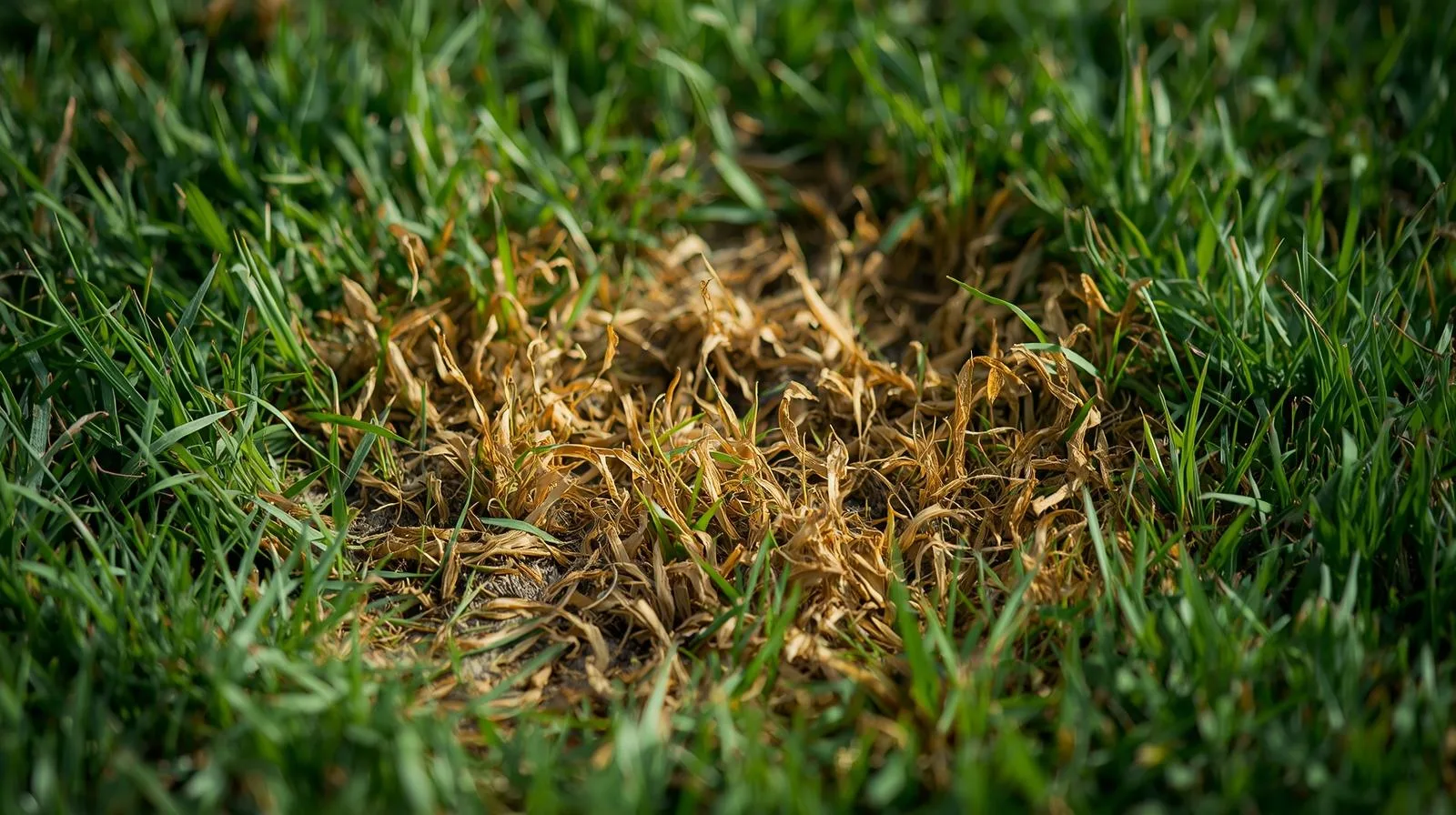
Circular tan rings after night irrigation on humid [Matthews](/areas/matthews-nc) fescue often trace to leaf wetness hours, not a new disease mystery. [Brown patch](/services/lawn-disease-control/) pressure rises when heads overlap and soil stays warm into October evenings.
Why night irrigation extends leaf wetness
Piedmont nights stay warm and humid well into October, so leaves that go to bed wet may not dry until mid morning. Brown patch fungi use those hours on tall fescue when dew and spray overlap.
Controllers set for afternoon heat often add a late cycle that lands near midnight. That timing helps on sand elsewhere but can saturate clay profiles while blades remain damp for too long.
A ring that respects sprinkler overlap is a different clue than random blotches in shade. Walk the pattern with a hose-end mind-set before assuming a calendar fungicide date failed.
Reading rings versus drought browning
Drought stress on fescue usually follows sun exposure and footprint recovery patterns. Brown patch rings often show darker margins with collapsed centers on irrigated turf that receives regular water.
Pull a few blades at the edge of a ring. Lesions with tan centers and dark borders support disease pressure linked to humidity. Crispy tips on unstressed neighboring blades suggest mower or heat issues instead.
Photograph the same zone at sunrise and again at noon. Rings tied to night wetness may look worse before evaporation; drought zones often worsen through afternoon on clay.
Controller changes that matter in fall
Shift heavy irrigation to morning finish times so blades enter evening drier. Reduce minutes on zones that already show pooling at downspouts on [Harrisburg](/areas/harrisburg-nc) clay.
Cycle-soak settings help infiltration without leaving blades dripping past dark. Pair timer edits with a rain sensor that actually cuts cycles during tropical remnants, not only during light mist.
[Lawn disease control](/services/lawn-disease-control/) may still be appropriate when humidity and history align, but fungicide without dryer nights often replays the same ring geometry.
Shade and air movement along property edges
Fence lines and privacy plantings trap air on humid nights. Rings that hug those borders may improve when lower branches are thinned to admit morning light, not only when products change.
Dense [landscape bed weed control](/services/landscape-bed-weed-control/) edges that spill into turf hold moisture against fescue crowns. Keep bed mulch off living crowns and maintain a narrow strip where air can move.
Tree canopies that grew three feet in five years change microclimate faster than irrigation maps update. Revisit shade patterns each fall before repeating last year’s spray schedule.
Fertility choices when disease is active
Fast-release nitrogen on active brown patch can enlarge rings on irrigated clay. Buffered programs with modest fall rates respect recovery without pushing soft growth during humid weeks.
Potassium and balanced [lawn fertilization](/services/lawn-fertilization/) support stress tolerance when applied before peak humidity, not as a rescue after rings appear.
Soil tests that show excess phosphorus rarely fix night wetness, but they prevent stacked errors when disease is mislabeled as fertilizer deficiency.
Documenting the fix for next season
Save controller screenshots after fall edits and note which heads were raised or replaced. Future owners inherit the same clay and humidity story even when the grass variety changes.
Use [contact](/contact/) with dates rings appeared, photos at dawn, and irrigation run times. Pine Valley Turf Management treats Greater Charlotte disease as a water-and-air problem first.
Brown patch rings after night irrigation usually shrink when mornings win over midnight spray on Piedmont fescue.
Humidity patterns across the Piedmont
River valleys and tree belts around Matthews hold dew longer than open upland lots in the same ZIP code. Humidity maps follow landform even when controller programs are copied house to house.
Irrigation audits in October should record ambient humidity and soil temperature at the zone, not only catch volume. Rings repeat when numbers look fine on a clipboard but leaves stay wet past breakfast.
Turf that recovered from summer stress is more susceptible when nights stay above sixty-five degrees and water lingers. Recovery programs need dryer evenings, not another rescue nitrogen spike.
Save dated photos of rings after tropical rain years. Those seasons predict when midnight irrigation will need earlier shutdown across Greater Charlotte fescue.
* **Disclaimer:** This article is for general informational purposes only. It is not professional advice, a quote, or a service agreement. Conditions at your home or property may differ; contact a qualified professional for an on-site evaluation before making repair, safety, or spending decisions.*